Summer Pet Safety Spotlight: Keeping Pets Cool, Calm, Hydrated, and Protected
Summer is a season filled with sunshine, outdoor adventures, family gatherings, and holiday celebrations. While many pets enjoy spending more time outdoors during the warmer months, summer also brings unique health challenges that every pet owner should be aware of.
From rising temperatures and dehydration to fireworks anxiety and sun exposure, taking proactive steps can help keep your furry family members safe, comfortable, and healthy all season long.
At Veterinary Medical Center, we believe prevention is one of the best ways to support your pet's well-being. This month, we're highlighting four important summer safety topics to help pet owners prepare for the hottest and busiest weeks of the season.
Beat the Heat: Preventing Overheating in Dogs
Dogs are much more vulnerable to heat-related illnesses than many owners realize. Unlike humans, dogs cannot cool themselves efficiently through sweating and instead rely primarily on panting to regulate body temperature.
As temperatures rise, dogs can quickly become overheated, especially during outdoor walks, exercise sessions, or extended periods in the sun.
Watch for warning signs such as:
- Excessive panting
- Drooling
- Bright red gums
- Weakness or fatigue
- Vomiting
- Disorientation
- Difficulty standing
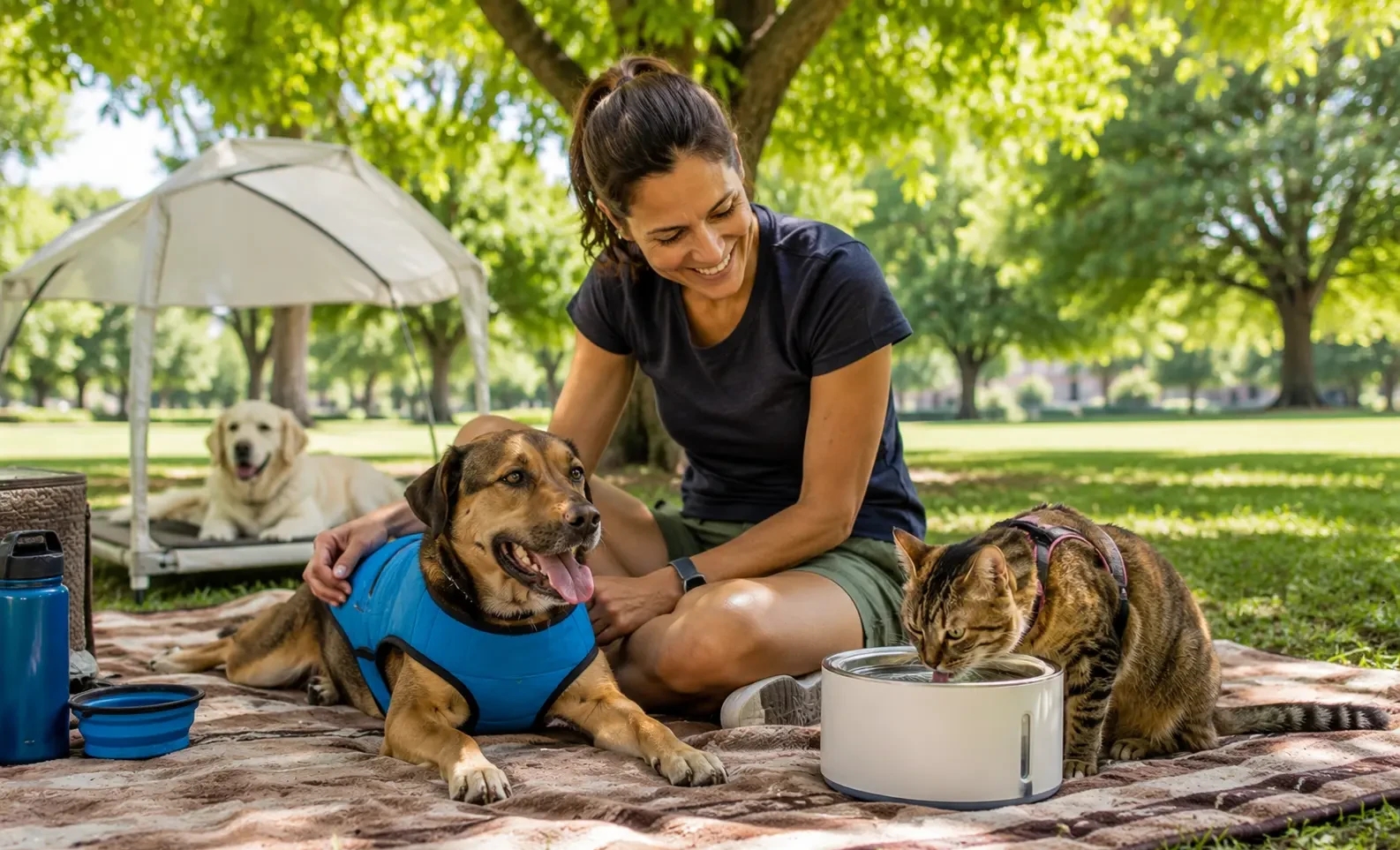
One helpful tool for active dogs during summer is a cooling vest. These specially designed garments help reduce body heat through evaporative cooling and can make outdoor activities more comfortable.
Cooling vests are particularly useful for senior dogs, brachycephalic breeds such as Bulldogs and Pugs, and pets that enjoy spending time outdoors.
In addition to cooling products, pet owners can help prevent overheating by:
- Walking dogs early in the morning or later in the evening
- Avoiding strenuous activity during peak heat hours
- Providing frequent water breaks
- Offering access to shaded areas
- Never leaving pets unattended in parked vehicles
Even a few minutes in a hot car can quickly become life-threatening.
Cat Hydration Heroes: Helping Cats Drink More Water
Many cats naturally consume less water than they should. Because domestic cats evolved from desert-dwelling ancestors, they often have a lower thirst drive than other animals.
While this trait may have helped wild cats survive, it can contribute to health concerns in modern indoor cats.
Proper hydration plays an important role in:
- Kidney health
- Urinary tract function
- Digestion
- Temperature regulation
- Overall wellness
Fortunately, there are several simple ways to encourage better hydration.
Many cats prefer moving water, making pet fountains a popular solution. Fresh, circulating water often attracts cats who may ignore traditional water bowls.
Additional hydration tips include:
- Feeding moisture-rich canned food
- Offering multiple water stations throughout the home
- Using wide, shallow bowls
- Refreshing water daily
- Keeping bowls away from litter boxes
- Adding small amounts of water to meals
Monitoring your cat's water intake becomes especially important during the summer months when higher temperatures can increase the risk of dehydration.
If you notice lethargy, dry gums, reduced appetite, or changes in drinking habits, contact your veterinarian for guidance.
Preparing Dogs for Fireworks Season
While July 4th is a favorite holiday for many families, fireworks can be one of the most stressful experiences of the year for dogs.
Dogs have highly sensitive hearing, making the loud booms and unpredictable sounds of fireworks particularly frightening. Some dogs experience mild nervousness, while others develop severe noise phobias that lead to panic, escape attempts, or destructive behavior.
Common signs of fireworks anxiety include:
- Trembling
- Pacing
- Hiding
- Whining
- Barking
- Excessive panting
- Clingy behavior
- Attempts to escape
Preparation is one of the most effective ways to help your dog feel more secure.
Before fireworks begin, consider creating a designated safe space where your dog can retreat if they become anxious. Many dogs feel comfortable in quiet interior rooms, covered crates, or familiar sleeping areas.
Additional calming strategies include:
- Closing windows and blinds
- Playing calming music or white noise
- Providing favorite toys and treats
- Exercising earlier in the day
- Ensuring ID tags and microchip information are current
Because many lost pet incidents occur around Independence Day, keeping dogs indoors during fireworks displays is one of the most important safety measures pet owners can take.
For dogs with severe anxiety, speak with your veterinarian before the holiday. Early planning often provides the best results.
Sunscreen Isn't Just for People
Many pet owners are surprised to learn that dogs and cats can get sunburned.
Pets with light-colored coats, thin fur, pink skin, or hairless breeds are especially susceptible to UV damage. Commonly affected areas include the nose, ear tips, eyelids, and belly.
Just as in people, repeated sun exposure can lead to:
- Painful sunburn
- Skin irritation
- Hair loss
- Chronic skin damage
- Increased risk of certain skin cancers
Protecting vulnerable pets from excessive sun exposure is an important part of summer health care.
Some simple sun safety practices include:
- Providing access to shade
- Limiting outdoor time during peak UV hours
- Using veterinarian-approved pet sunscreen
- Monitoring exposed skin for redness or irritation
- Considering UV-protective pet clothing when appropriate
It is important to remember that human sunscreen products are not always safe for pets.
Some ingredients can be harmful if ingested through grooming. Always consult your veterinarian before applying any sunscreen product to your pet.
A Summer Safety Checklist for Pet Owners
As temperatures rise and holiday celebrations approach, a little preparation can go a long way toward protecting your pets.
Remember to:
✓ Keep fresh water available at all times
✓ Schedule walks during cooler parts of the day
✓ Watch for signs of overheating
✓ Encourage healthy hydration habits
✓ Create a fireworks-safe environment
✓ Keep pets indoors during fireworks displays
✓ Verify microchip and identification information
✓ Protect vulnerable pets from excessive sun exposure
✓ Monitor for signs of sunburn or skin irritation
✓ Schedule routine wellness visits
We're Here to Help
Every pet has unique needs, especially during the summer months. Whether you have questions about heat safety, hydration, anxiety management, skin protection, or overall wellness, our veterinary team is here to help.
At Veterinary Medical Center, we are committed to helping pets stay healthy, comfortable, and protected throughout every season. If your pet is experiencing signs of overheating, dehydration, anxiety, or skin concerns, don't wait to seek professional guidance.
We wish you and your pets a safe, happy, and healthy summer filled with fun, comfort, and peace of mind.
Veterinary Medical Center
Veterinary Medical Center is a full-service pet hospital that offers comprehensive medical services for cats and dogs in Sacramento and the surrounding areas.